
15 Jun How to Keep Utility-Scale Solar Construction Moving Through Summer
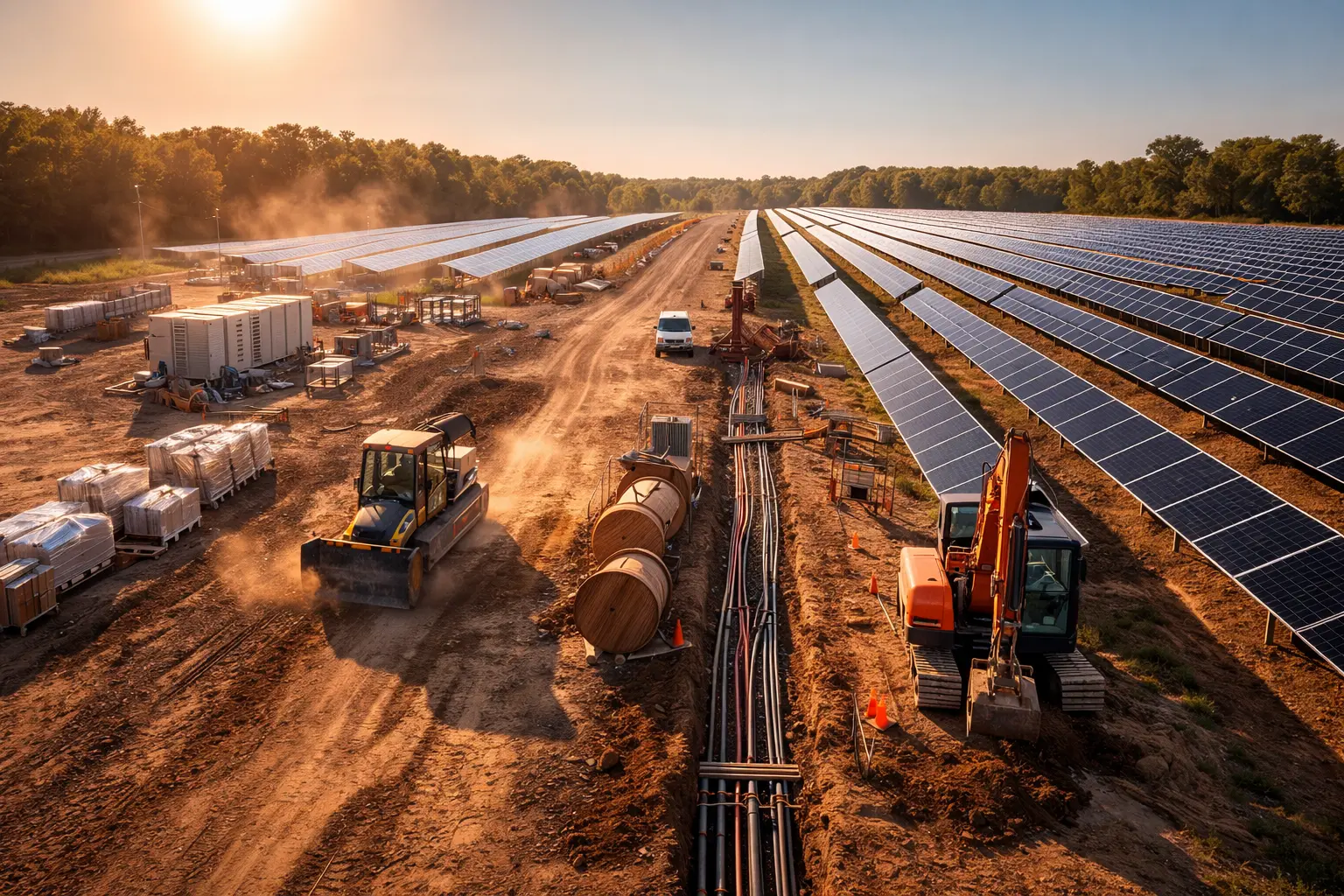
Summer can look like the ideal season for utility-scale solar work. Longer days, broad weather windows, and active construction calendars all seem to support momentum. But in practice, summer exposes weak planning fast. Heat, dust, traffic on access roads, inspection timing, and labor coordination can all start dragging on production if the project is not organized well from the start.That is why summer schedule control is not just about working faster. It is about reducing friction. On large solar sites, the projects that keep moving are usually the ones that are planned for field conditions, not just calendar dates.
Access Roads and Site Logistics Carry More Weight Than People Expect
We have seen solar projects where the racking and installation plan was solid, but daily movement across the site became the real problem. Long travel distances, soft areas, congested laydown zones, or poorly timed deliveries can quietly slow production without showing up as a headline issue.
What matters is flow. Crews, materials, equipment, and inspections all need a site that supports continuous movement. If the logistics plan is weak, output starts dropping long before anyone admits the schedule is at risk.
Heat Changes Productivity, Even on Well-Run Sites
Summer conditions affect more than comfort. They change pacing, shift work windows, affect equipment handling, and increase the importance of site planning around water, shade, and crew movement. The strongest teams do not ignore that. They build around it.
This is one of those areas where realism matters. A schedule that assumes the same pace every hour of every day usually starts breaking down once actual field conditions show up. A better plan accounts for how people and equipment really perform on site in sustained heat.
Coordination Between Civil and Installation Teams Has to Stay Tight
On utility-scale solar work, civil activity and installation activity are closely tied. If grading, drainage, roads, or trenching fall behind or drift out of sequence, downstream crews feel it immediately. What looks like a minor civil delay can become a widespread slowdown across the site. That is where strong field leadership matters. It keeps the work connected. Instead of letting each scope run in isolation, it keeps decisions tied to the overall build rhythm.
Repetition Only Helps If the Process Is Controlled
One of the advantages of solar construction is repetition. Once crews get into rhythm, production can scale quickly. But repetition does not solve bad coordination. It only amplifies it. If the process is clean, repetition creates speed. If the process is sloppy, it multiplies mistakes. The best-performing projects are not just repetitive. They are organized. Materials land where they should. Access stays usable. Crews are not waiting on avoidable fixes. That is what turns repetition into real schedule performance.
Summer gives solar teams an opportunity to move aggressively, but only if the site is prepared for how the work actually unfolds. Access, crew flow, civil coordination, and realistic pacing all matter more than a paper schedule suggests. The projects that stay on track through summer are usually the ones that respect field conditions early. In utility-scale solar, steady progress is rarely accidental.